

© Burgen-web.de - Wir bringen die Steine zum Reden!

Heilbronn - Waldheide
Waldheide - Reste einer modernen Festung der nuklearen Abschreckung
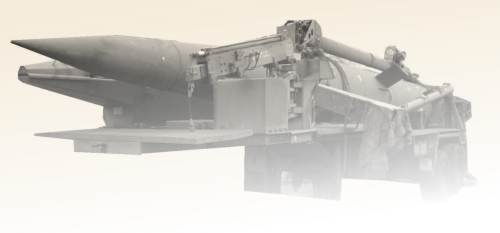
Drei Kilometer östlich von Heilbronns Stadtzentrum entfernt befindet sich in 310 Metern über NN eine waldlose Hochfläche. Nur wenige Reste erinnern in der rechteckigen 1 km langen und 0,5 km breiten, rechteckigen Wiesenlandschaft an die einstige Nutzung als festungsartig ausgebaute Raketenabschußbasis für Pershing II- Mittelstreckenraketen. Heute erinnern zwei Gedenksteine (einer im ehemaligen Montagebereich hinter den noch vorhandenen Gebäuden und einer an der Südwestecke) an die Vergangenheit. Die "Waldheide" kann man heute, nachdem die Festung geschliffen ist, als modernen "Burgstall" betrachten.English summary
History in the Unterland Nuclear base Waldheide/Heilbronn in South Germany On January, the 11th 1985 three GIs of the "C" Battery, 3rd Battalion, 84th Field Artillery died when a section of a Pershing II exploded on the area of "Fort Camp Redleg", in German called Waldheide, in Southwest-Germany. 9 other GIs were injured. The reason for the explosion of the missile was an electrostatic charge between the installation of the missile on the launcher. Since 1977 middle range missiles were positioned on the "Waldheide", an area on a plateau only 3 kms from the center of Heilbronn in Baden Wuerttemberg. 36 of the 108 Pershing II which all were positioned in three bases in Europe (New Ulm, Heilbronn and Schwaebisch Gmuend- Mutlangen) after 1980 were positioned on the Waldheide. 12 of the missiles were in so called "quick reaction areas" ready to start in a very secured part of the camp. 12 other missiles were mobile to transport them with special trucks. In the nineteeneighties the Pershing II was the exactest missile in the target with a flight- continuity of only 12 minutes and a range of 1850 kms. (The nuclear warhead had 10 - 20 kt TNT, maximum speed: 3800 metres/second, maximum flight hight 400 kms). After the INF-contract (Memorandum of understanding regarding the establishment of the data base for the treaty between the USSR and the USA on the elemination of their intermediate-range and shorter-range missiles) in 1987 and Gorbatschow's Perestroika the Pershing II - missiles and the launchers were removed and the US army left the base in1990. Today the complete base is demolished and the area is renaturated. You can find a commemorative stone at the place of the accident: Lest we forget SSG John Leach SGT Todd A. Zephier PFC Darryl L. Shirley who made the ultimate sacrifice for their country and peace and the soldiers of the C Battery, 3rd Battalion, 84th Field Artillery (Pershing) injured in the missile fire at Fort Redleg, Heilbronn/Germany, 11 January 1985 In unseren PDF-Dateien finden Sie eine ausführliche Beschreibung, Fotos, selbst erstellte Grundrisse, Quellenangaben, Anfahrtsbeschreibungen und Touristik-Informationen (Gastronomie, Öffnungszeiten, Wandertipps): Klicken Sie hier um die PDF-Datei zu öffnen: Waldheide Teil 1 Weitere Artikel siehe Waldheide Teil2 Waldheide Teil 3 und 4 Um diesen Artikel lesen zu können, benötigen Sie den kostenlosen Adobe Reader (c) von Adobe, welchen Sie sich hier herunterladen können © 2020 by Buchali
Beim Klicken auf die Google Maps-Karte können Sie diese Karte mit der hier beschriebenen Anlage vergrößern.
Datenschutzhinweis:
Bitte beachten Sie, dass sie dadurch Google Maps öffnen und unsere Website verlassen. Dadurch gelten dann die Datenschutzrichtlinien von
Google Maps.













© Burgen-web.de - Wir bringen die Steine zum Reden!
Waldheide - Reste einer modernen Festung der
nuklearen Abschreckung
Drei Kilometer östlich von Heilbronns Stadtzentrum entfernt befindet sich in 310 Metern über NN eine waldlose Hochfläche. Nur wenige Reste erinnern in der rechteckigen 1 km langen und 0,5 km breiten, rechteckigen Wiesenlandschaft an die einstige Nutzung als festungsartig ausgebaute Raketenabschußbasis für Pershing II- Mittelstreckenraketen. Heute erinnern zwei Gedenksteine (einer im ehemaligen Montagebereich hinter den noch vorhandenen Gebäuden und einer an der Südwestecke) an die Vergangenheit. Die "Waldheide" kann man heute, nachdem die Festung geschliffen ist, als modernen "Burgstall" betrachten.English summary
History in the Unterland Nuclear base Waldheide/Heilbronn in South Germany On January, the 11th 1985 three GIs of the "C" Battery, 3rd Battalion, 84th Field Artillery died when a section of a Pershing II exploded on the area of "Fort Camp Redleg", in German called Waldheide, in Southwest-Germany. 9 other GIs were injured. The reason for the explosion of the missile was an electrostatic charge between the installation of the missile on the launcher. Since 1977 middle range missiles were positioned on the "Waldheide", an area on a plateau only 3 kms from the center of Heilbronn in Baden Wuerttemberg. 36 of the 108 Pershing II which all were positioned in three bases in Europe (New Ulm, Heilbronn and Schwaebisch Gmuend-Mutlangen) after 1980 were positioned on the Waldheide. 12 of the missiles were in so called "quick reaction areas" ready to start in a very secured part of the camp. 12 other missiles were mobile to transport them with special trucks. In the nineteeneighties the Pershing II was the exactest missile in the target with a flight- continuity of only 12 minutes and a range of 1850 kms. (The nuclear warhead had 10 - 20 kt TNT, maximum speed: 3800 metres/second, maximum flight hight 400 kms). After the INF-contract (Memorandum of understanding regarding the establishment of the data base for the treaty between the USSR and the USA on the elemination of their intermediate-range and shorter-range missiles) in 1987 and Gorbatschow's Perestroika the Pershing II - missiles and the launchers were removed and the US army left the base in1990. Today the complete base is demolished and the area is renaturated. You can find a commemorative stone at the place of the accident: Lest we forget SSG John Leach SGT Todd A. Zephier PFC Darryl L. Shirley who made the ultimate sacrifice for their country and peace and the soldiers of the C Battery, 3rd Battalion, 84th Field Artillery (Pershing) injured in the missile fire at Fort Redleg, Heilbronn/Germany, 11 January 1985 In unseren PDF-Dateien finden Sie eine ausführliche Beschreibung, Fotos, selbst erstellte Grundrisse, Quellenangaben, Anfahrtsbeschreibungen und Touristik-Informationen (Gastronomie, Öffnungszeiten, Wandertipps): Klicken Sie hier um die PDF-Datei zu öffnen: Waldheide Teil 1 Weitere Artikel siehe Waldheide Teil2 Waldheide Teil 3 und 4 Um diesen Artikel lesen zu können, benötigen Sie den kostenlosen Adobe Reader (c) von Adobe, welchen Sie sich hier herunterladen können © 2020 by Buchali
Heilbronn - Waldheide
Beim Klicken auf die Google Maps-Karte können Sie diese Karte mit der
hier beschriebenen Anlage vergrößern.
Datenschutzhinweis:
Bitte beachten Sie, dass sie dadurch Google Maps öffnen und unsere
Website verlassen. Dadurch gelten dann die Datenschutzrichtlinien von
Google Maps.